July 2026 · 6 min read · VIS Editorial
The Gulf is in the middle of one of the largest construction booms in history. Across the UAE, Saudi Arabia and Qatar, the pipeline of projects under way and announced runs to roughly $1.7 trillion. Money and ambition are not the constraint. Increasingly, capability is.
The bottleneck isn't concrete — it's coordination
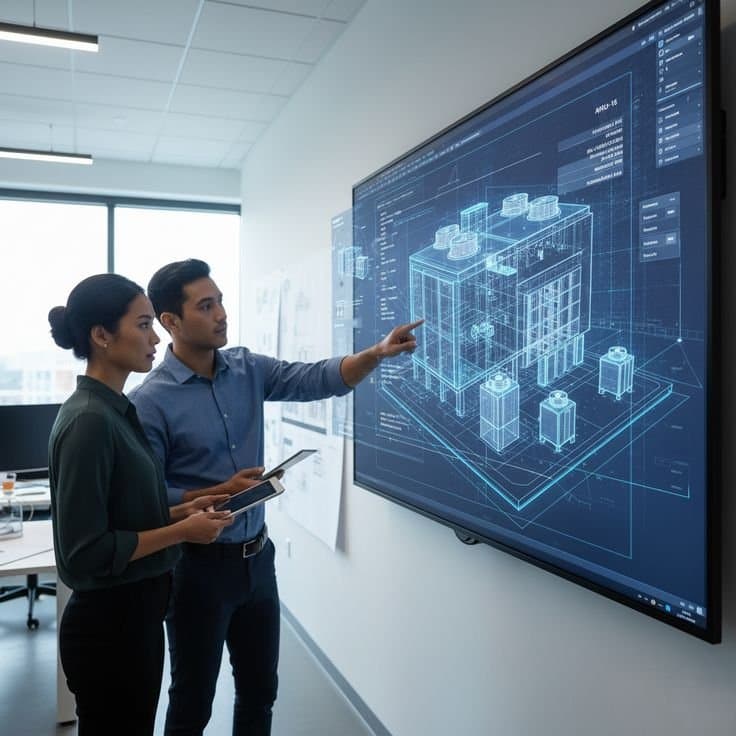
Modern megaprojects are built twice: once as a coordinated digital model, and once on site. The digital build — run in Building Information Modelling environments — catches the clashes, sequences the trades and drives the documentation. When there aren't enough people who can run that digital build to standard, the whole programme slows.
From differentiator to baseline
A decade ago, BIM was a selling point. Today it is a baseline expectation. Large developments and the consultants who run them require it as a condition of working on the project at all. Revit, Navisworks and cloud coordination on platforms like Autodesk Construction Cloud are no longer 'nice to have' — they are the working language of the site.
12,000 roles, and a shortage of hands
At any given time there are more than 12,000 open roles across the UAE and Saudi Arabia that touch BIM and Revit workflows, and the supply of genuinely job-ready candidates has not kept pace. Saudi Vision 2030 projects such as NEOM depend on large-scale BIM deployment, which only widens the gap.
What 'job-ready' actually means
Job-ready is not the same as software-familiar. Employers need people who understand real construction sequences, who can run clash detection and model federation, who document to international standards, and who have coordinated across disciplines under project pressure. That comes from practising on live workflows, not from a certificate alone.
Closing the gap
The fastest way to close a skills gap is to train against the work itself and connect training directly to placement. Canadian-certified BIM training built around live UAE, KSA and Qatar workflows — finishing with a hands-on experience certificate and a route into the roles that are open — turns the bottleneck into a pathway. The projects are there; the opportunity is for the people ready to build them.